The UK government’s ambition to establish a domestic fusion industry depends on a prototype power plant on the site of a former coal-fired power station in Nottinghamshire – a project delivered by UK Fusion Energy with the UK Atomic Energy Authority (UKAEA).
Simulation capability lead Tom Deighan explains why advanced simulation and modelling technologies are bridging the gap between theoretical fusion and this first-of-a-kind tech demonstrator.
Fusion is at an inflection point. Is that changing what work is being done?
As a first-of-a-kind project, the biggest challenge is the absence of a previous fusion plant to refer to and understand how everything will perform. We have a number of experimental facilities, such as CHIMERA (Combined Heating and Magnetic Research Apparatus), under construction at UKAEA South Yorkshire, which will enable testing in a combined thermal and electromagnetic environment, and the LIBRTI (Lithium Breeding Tritium Innovation) programme, aiming to study and validate tritium breeding technologies. But these are looking at subsets of physics rather than the whole system. The challenge for engineers is how we deploy simulation effectively, along with the knowledge from these experiments, to build enough confidence in a full power plant design.
How is your use of simulation technologies changing?
Within fusion engineering, much of the work focuses on the impact of plasma on surrounding systems. That involves thermal-structural analysis and understanding how neutrons move through materials and structures. Traditionally, those analyses have been discrete, helping to answer specific questions or explain an experiment’s outcome. When you move to designing a full power plant, those questions need to be considered together. The focus now is on bringing those different simulation activities into combined workflows so we can understand system behaviour as a whole.
A key part of that is improving how simulation links back to design. We need to make the workflow between CAD models and analysis tools less fragmented. Models are created, exported, refined and re-imported in a repeating cycle. We are adapting to create a seamless, two-way interface so analysts and designers can collaborate within the same platform.
Another major area is managing uncertainty. The lack of experimental data to rely on means more uncertainty in our simulations, which we can’t remove through extensive physical testing. Historically, engineers might compensate by applying conservative safety factors. But for fusion, we need a more rigorous understanding of how uncertainty propagates through every stage. Rather than treating outputs as fixed, we need to think in terms of confidence levels. What is the likelihood that a design will meet a given requirement? That represents a significant shift in how we work. It is also more computationally intensive because, instead of running a single deterministic simulation, you may need to run thousands to understand the reliability and robustness of a design.
Related to that is inverse uncertainty quantification (UQ). Because data is limited, we need to extract as much value as possible from that data. That means designing experiments more effectively. For example, deciding where sensors should be placed and how many are needed to maximise value.
We also need to use experimental data to refine model inputs over time, progressively narrowing uncertainty. Over time, this allows us to build a more reliable understanding of system behaviour. But that can’t happen in isolation. The parameters used in one model are often the same parameters affecting work elsewhere across the programme, so UQ and simulation management need to be managed across teams, disciplines and projects. That’s both a technical and cultural shift.
How far can simulation realistically go in modelling the full system?
Even with advances in computational power, it’s not practical to create a single ultra-high-fidelity model that captures every physical process in the plant and underlying physics, certainly not within this timescale.
One area becoming increasingly important is systems simulation. Fusion research has traditionally focused more on high-fidelity physics models, but other industries, such as automotive, make extensive use of reduced-order system models to understand how complex systems interact as a whole. The idea is to simplify certain areas so computational effort can be concentrated where it matters most, while still capturing the key interactions at the system level.
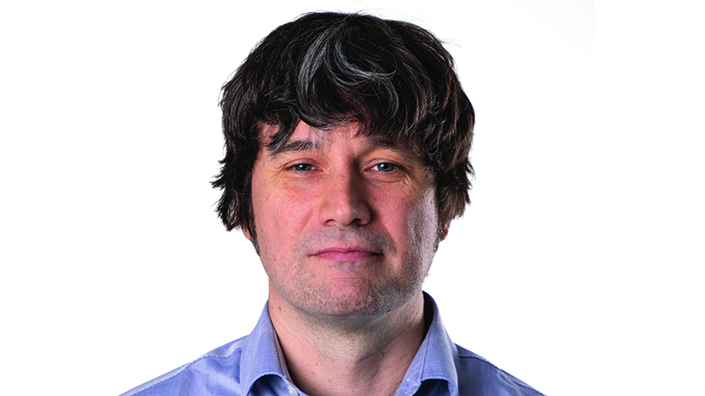
Tom Deighan
Within our teams, expanding our systems simulation capability is a big focus. That includes developing in-house libraries and workflows using tools such as Modelica and Simulink to understand system-level behaviour and interactions across the plant. This also has another important application. If aspects of a system can’t be fully validated experimentally, simulation alone cannot remove all uncertainty.
A degree of commercial risk will
always remain at the design stage.
One way to mitigate that is extending the use of simulation beyond the design phase and into live operations through a digital twin. In its truest sense, a digital twin is a live simulation running alongside the physical machine. It combines real-world operational data with simulation outputs to provide enhanced insight, such as in areas where sensors either can’t be installed or wouldn’t survive the environment.
By linking those two streams in real time, engineers can gain a much deeper understanding of how the plant is behaving. That improves fault diagnostics, condition monitoring and operational decision-making, whether through automated control systems or human operators. It also creates opportunities to optimise future performance and protect critical assets.
And because systems simulations can be designed to run relatively quickly, they provide a practical route to enabling that kind of live operational capability. In that sense, simulation is no longer just a design tool; it is becoming something that will support the lifecycle of an asset, from concept and validation through to real-time operation.
Simulation and Modelling 2026 takes place in Birmingham from 29 to 30 September. Find out more and register now.
Want the best engineering stories delivered straight to your inbox? The Professional Engineering newsletter gives you vital updates on the most cutting-edge engineering and exciting new job opportunities. To sign up, click here.
Content published by Professional Engineering does not necessarily represent the views of the Institution of Mechanical Engineers.