Working for the World Nuclear Transport Institute, it was essential that she kept track of changes to roads, vehicles and structures around the world – from the uranium mines of Africa or Asia to power stations in Europe or the US – to prevent material leaks and potential catastrophe.
Keeping abreast of changes, she ensured six decades of safe transport continued by constantly reviewing regulations and updating packaging for radioactive material. “We test the package according to accident conditions,” she says. “In the event of… a puncture, or in the event of a fall, the package is designed to avoid any leak.”
Now, instead of tracking change she is actively promoting it, as a co-founder of Women in Nuclear (WiN) UK. The organisation is one of a growing number of groups tackling gender inequality for women in business and engineering, highlighted this week by International Women’s Day.
‘Economic imperative’
“Women now make up 43% of GPs and about half of all solicitors, but only about 8% of professional engineers, and this figure has remained static under this government while the proportion of women working in high-tech industries has actually sadly declined,” says Labour leader Jeremy Corbyn, speaking at the recent EEF conference in Westminster.
“My mum was a very fierce advocate of young women going into science and engineering. Not just as a matter of social justice but as an economic imperative, because we cannot build a more prosperous economy without making use of the talents of everyone.”
That point – gender equality not just for its own sake, but for economic reasons as well – is made all the more important by the skills gap. Last year, Engineering UK estimated engineering companies need a staggering 265,000 new employees per year until 2024.
The high demand is particularly important in the UK’s nuclear sector, says Anne-Charlotte Dagorn, head of Assystem’s Incredible Women diversity programme. Yesterday, the multinational firm signed WiN’s Women in Nuclear Charter as it continues to work with the UK government and firms such as EDF on a variety of nuclear maintenance and dismantling projects.
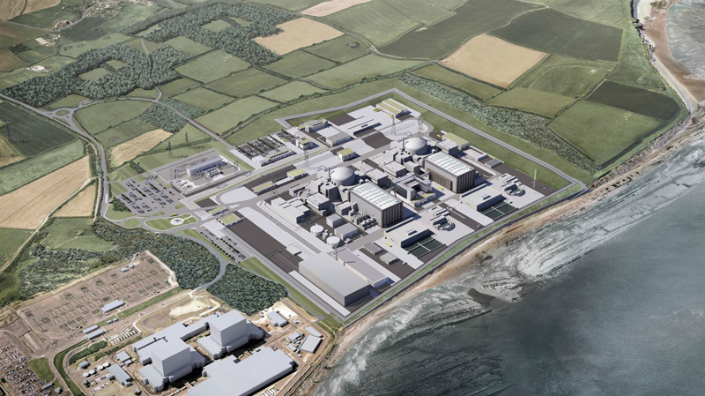
A computer-generated image of how Hinkley Point C could look (Credit: EDF)
“We have a growing need for nuclear engineers today and in the coming years,” says Dagorn. “Obviously as a woman, I think we have to do this for… equal opportunities, but beyond that fact, as a company we need to have diversity as a driver. Women represent half of the [potential] workforce available, they bring different qualities and skills and allow us a more diverse work environment.”
The number of men and women in the sector is especially imbalanced in leadership roles, the company says.
“There is a clear industry need to strike a better gender balance, provide enhanced support for development and ultimately promote a more equalised view of the nuclear sector in order to support and attract more talented women,” says Assystem chairman and CEO Dominique Louis – a French spelling of the male name – urging other companies to follow suit.
The WiN charter aims to not only attract more female engineers and other workers to the nuclear sector, but to keep them throughout their careers and support them at work. Now signed by 58 companies in the UK, it includes commitments to increasing transparency of promotions, educating leaders to challenge bias and sexism, creating mentoring and coaching opportunities and reviewing statistics regularly to address imbalances.
‘You can have fun’
As a co-founder of WiN UK, CEO of AB5 Consulting and a member of the Women's Engineering Society council, Bonnardel also visits schools and invites students to see nuclear workers in action.
“I really believe in that connection,” she says. “If a young person sees role models and how it works, they will make their own opinion and it will stick in their memories.”
That connection starts with an emotional response. “What I see, a lot of the time, is surprise – they are surprised that you can have fun in a scientific or engineering career, in the nuclear or space sectors. Fun in a way that you can enjoy yourself and really get motivated to do an activity… it is a discovery.”
As more companies strive for equality, there is hope that those discoveries will lead to long and fruitful careers in the nuclear sector. Assystem’s Dagorn sees positive change already in France, where the Incredible Women programme began more than 10 years ago.
In 2010, she says, only 11% of managers were women – that is now 16% and the company is aiming for 30% by 2020. That progress brings cultural change and yet more progress, she says.
“We can really see the difference between generations… there is less fear there, more and more ambition,” she says. “My dream is that one day we won’t need programmes like this anymore.”
Content published by Professional Engineering does not necessarily reflect the views of the Institution of Mechanical Engineers.