The engineer joined Lotus when the Emira was nothing more than an idea, waiting to become a design. With his team, Fletcher worked on the car during the Covid years, emerging with the “world’s fastest four-cylinder sports car”, which screams around corners, leaving echoes of Lotus lore in its wake.
Fletcher was there on launch day, in the summer of 2021. He, and everyone else at Lotus, had hoped for clear skies and sunshine. Instead, they got rain. Bucketloads.
“There was a torrential thunderstorm in Norfolk. It was chucking it down,” he remembers. “The car was still a prototype. It hadn’t done many development miles. It had never really been out in the rain. It came out, with (Lotus’) Gav Kershaw driving it, windscreen wipers at full pelt, working properly. I was like ‘Yes!’”
To understand his excitement, one has to travel to the streets of Coventry, where he grew up “in the shadow of” Jaguar’s factory, and back to the 1980s and 90s, when Ferrari F40 and Porsche 959 posters adorned his bedroom walls.
Always having a go
One of four children, Fletcher grew up in a busy home near the Browns Lane plant (which Jaguar no longer uses). His mother worked as a nurse and his dad as a tradesman.
Helping his dad fix cars, Fletcher adopted an “I’ll have a go” attitude, which spilled over into dismantling stopwatches, clocks and televisions – with mixed success.
“Everyone I knew, their dads worked at the Jag factory or some other car plant,” Fletcher explains. “I was super-inquisitive about anything mechanical. For a while, I broke everything. Then, as I grew up, I started to break fewer and fewer things.”
With guidance from a physics teacher he remembers fondly, he decided to study mechanical engineering at the University of Leeds. He loved physics, with its balance of logical mathematics and abstract weirdness (like quantum mechanics) – but was steered towards mechanical engineering as ‘applied physics’. He was also a keen musician, playing bass guitar for a covers band that was filling out some big venues and had a residency at a local bar.
From musician to conductor
With his engineering degree, Fletcher landed a spot on Jaguar’s graduate programme. He’d done a lot of FEA (finite element analysis) simulation during his studies, which came in handy at Jaguar.
He worked on projects like the XF model, analysing side and rear crash simulation models and feeding them into the design.
“This was absolutely foundational. I worked on some amazing projects,” Fletcher says. “Our analysis drove a lot of the design.”
After about six years, Fletcher joined Tata Motors, which coincidentally landed up buying Jaguar. He started travelling to India, to train and develop teams. He also helped draw up a roadmap for the company to break into global markets.

In the years that followed, Fletcher worked at a consulting firm, popped back to spend another year at Tata, jumped in for a thrilling ride at Lotus and tried out a few start-ups. He grew from an engineer solving problems into a business leader, managing teams and designing organisational structures.
Fletcher studied further and was exposed to global client work and business development. Or, as he likes to frame it, he went from being a musician in the orchestra to a conductor, who had learned to be comfortable with the fact that he can’t play every instrument.
Earlier this year, Fletcher, an IMechE member, joined DRVN Automotive Group as technical director. It was another job that “scared the hell out of my wife”, he jokes. That’s because it was an adventure with a young company out to capture the illusive magic of “peak analogue” – restoring or replicating classic cars from bygone eras.
DRVN is a low-volume business, associated with a handful of big motoring brands. The company is designing its own “reimagined” classics – which are top secret at the moment – but most of its efforts go into modifying or recreating heritage cars (like the Ford Escort RS Mk1), driving them into the 21st century. This includes using new, lightweight composite materials or boosting the performance of a powertrain. There’s also a big focus on optimising parts and improving the driver’s experience.
DRVN is not turning internal combustion cars into electric vehicles, however. Fletcher says their clients are after that “visceral sensation” that came before today’s “iPhone type of vehicles”.
He is enjoying the new challenge and loves finding simple ways to understand incredibly complex engineering problems – like how to improve a set of windscreen wipers from the 1960s.
Don’t be a passenger
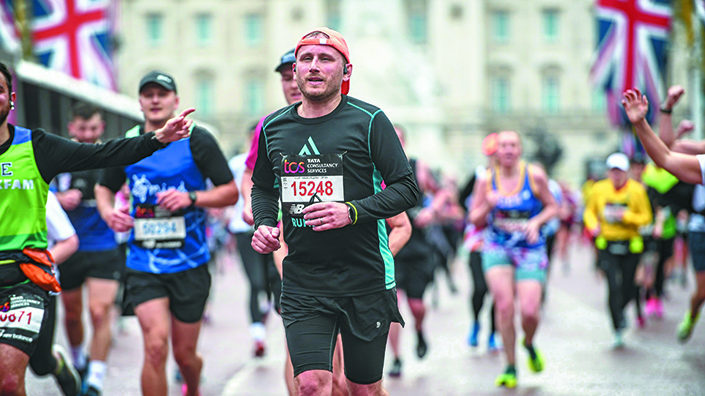
Fletcher still plays bass, although not as much nowadays, and has two children. He also likes to run and conquered the London marathon a couple of years ago.
To engineers just setting out on their journeys, his message is all about remaining firmly in the driver’s seat.
“Own your career,” he says. “The hardest decision I ever made was to leave Jaguar. But I didn’t want to be the guy riding it out until my pension.
“A lot of graduate engineers are looking for a business to help them. Flip this around. Make your own decisions. And ask questions. Even the dumb ones. You’ll usually find there are five other people in the room who don’t know the answer.”
To nominate an IMechE member making a difference, email profeng@thinkpublishing.co.uk.
Want the best engineering stories delivered straight to your inbox? The Professional Engineering newsletter gives you vital updates on the most cutting-edge engineering and exciting new job opportunities. To sign up, click here.
Content published by Professional Engineering does not necessarily represent the views of the Institution of Mechanical Engineers.