Institution news
In March 1919, the Australian Government offered a £10,000 prize to the first Australians to fly a British-built aircraft from England to Australia in 30 days or less.
Captain Ross Smith, his brother Lieutenant Keith Smith and mechanics Sergeants James Bennett and Wally Shiers took up the challenge. They departed Hounslow, England, on 12 November 1919 and landed in Darwin, Northern Territory, on 10 December, completing the journey in less than 28 days and winning the Great Air Race.
Their achievement demonstrated remarkable courage and endurance, while showing the rapidly developing potential of aviation.
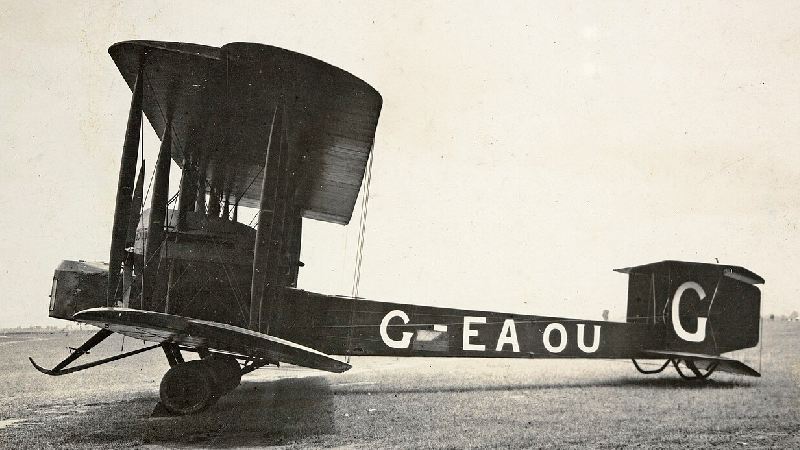
An innovative aircraft
Designed in 1917 by Rex Pierson, who later designed the Wellington bomber, the Vimy incorporated hollow spar longerons and steel reinforcements. These features contributed to the strength and reliability needed for long-distance flight.
Although the aircraft did not enter service during the First World War, the Vimy design played an important role in aviation history. Other Vimy aircraft completed the first non-stop transatlantic flight in June 1919 and the first flight from England to South Africa in 1920. The design was also adapted for commercial use.
Nic Coulthard, IMechE Oceania President, presented the award at a ceremony attended by people who have helped preserve the aircraft and share its story. He said:
“It is an honour to present our 154th Engineering Heritage Award and the first awarded to an aviation artefact in Australia. This Vimy was not only technically significant. It connected continents, countries and people as never before.”
Preserving its legacy
Adelaide Airport Managing Director Brenton Cox formally accepted the award and highlighted the aircraft’s power to inspire future generations.He said:
“Children think that if they could do it 100 years ago, maybe there is something they could do if they are really bold. That story should never be forgotten, and this award helps make sure that is the case.”
The aircraft has a particularly strong connection to Adelaide. Three members of its crew, brothers Ross and Keith Smith and Wally Shiers, were born in the city.
The original aircraft has remained on public display since 1919 and has appeared in exhibitions across Australia. In May 2022, it moved into a purpose-built, climate-controlled exhibition space at Adelaide Airport.
It is one of two surviving original Vickers Vimy aircraft. The other, which completed the first non-stop transatlantic crossing, is displayed at the Science Museum in London.